

Does Dental Insurance Cover Fillings? What to Check Before Treatment
Learn how dental insurance may handle fillings, what can affect your benefits, and which plan details to review before treatment.
Written and researched by Maria Dumitru.
Founder and Content Editor at Dental Coverage Hub
Last reviewed: September 2026
What You’ll Learn
Dental insurance may help pay for fillings, but seeing “fillings covered” in a plan summary does not tell you everything you need to know about the benefit.
The amount a dental plan contributes can depend on how it classifies the restoration, whether a deductible or cost-sharing applies, the dentist’s network status, waiting-period rules, the annual maximum, and other plan limitations.
Details about the filling can matter too. Two fillings may both be covered services but still be processed differently because they involve different teeth, different numbers of tooth surfaces, replacement rules, or restorative materials.
The most useful question is therefore not simply “Does dental insurance cover fillings?”
It is:
“How does my specific dental plan handle the filling my dentist is recommending?”
Quick Answer
Many dental insurance plans provide benefits for fillings because fillings are a common form of restorative dental care. However, coverage is determined by the specific plan.
A covered filling may still leave you with out-of-pocket costs. Your deductible, copay or coinsurance, provider network, waiting period, annual maximum, replacement limitations, filling material, and other plan provisions can affect how the claim is processed.
In other words, covered does not necessarily mean paid in full.
Key Takeaways
- Dental insurance may help pay for fillings, but coverage rules vary by plan.
- Fillings are generally restorative services and may be placed in a basic-care category, although plan classifications can differ.
- A deductible, copay, coinsurance, or other cost-sharing may apply even when a filling is covered.
- Network status can affect the amount used to calculate benefits and what you ultimately owe.
- Multiple fillings may not be processed identically because the teeth and surfaces being restored can differ.
- Replacement fillings can be subject to additional frequency or replacement limitations.
- Filling material may affect the benefit under plans that use alternate-benefit provisions.
- A pre-treatment estimate can help clarify expected benefits when coverage is uncertain, but it is not necessarily a guarantee of final payment.
In This Guide
Does Dental Insurance Cover Fillings?
Dental insurance commonly provides benefits for restorative procedures such as fillings, but there is no single coverage rule that applies to every dental plan.
Each plan establishes its own covered services, cost-sharing provisions, exclusions, limitations, network rules, annual maximums, and other benefit terms.
Even plans administered by the same dental benefits company can have different benefit designs.
That means another person’s experience with a filling does not necessarily tell you how your own plan will process the same type of treatment.
When reviewing coverage, look beyond a general statement such as “basic services covered” or “fillings covered.”
The plan documents should help you determine:
- Whether the proposed restoration is covered
- How the service is classified
- Whether a deductible applies
- What cost-sharing applies
- Whether a waiting period affects eligibility
- Whether the dentist is in your plan’s network
- Whether replacement or material-related limitations apply
Are Fillings Considered Basic or Restorative Dental Care?
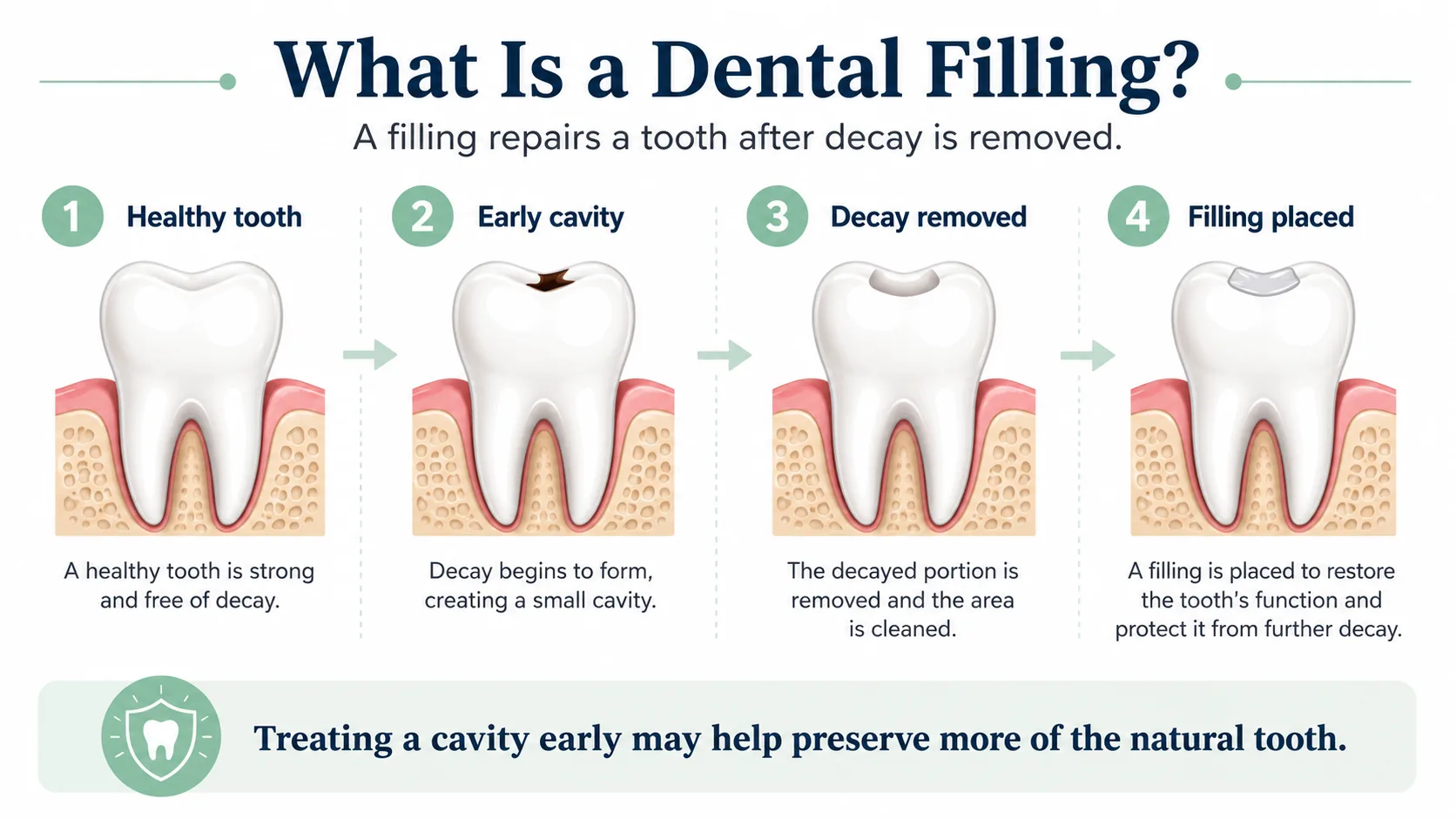
A filling is a restorative dental procedure because it restores tooth structure.
In dental insurance documents, fillings may also appear within a category described as basic services, basic restorative care, or similar wording.
However, dental benefit categories are not standardized across every plan.
One plan may group restorative procedures differently from another, and the terms used in a plan summary do not automatically tell you what deductible, copay, coinsurance, or other rules will apply.
Instead of assuming that “basic” has the same meaning everywhere, check the plan’s Schedule of Benefits, certificate of coverage, policy documents, or other official benefit materials.
What Can Change How a Filling Is Covered?
Several details can influence how a dental plan handles a filling.
| Plan or treatment detail | Why it can matter |
|---|---|
| Service classification | The plan may place fillings within a restorative or basic-care benefit category |
| Allowed amount | The plan may calculate benefits from a plan-recognized amount rather than the dentist’s full charge |
| Deductible | An applicable deductible may need to be satisfied before the plan contributes |
| Copay or coinsurance | You may still share part of the covered cost with the plan |
| Network status | In-network and out-of-network treatment can produce different patient costs |
| Waiting period | A new plan may not immediately provide benefits for some restorative services |
| Annual maximum | Plan payments for fillings may reduce the benefit available for other covered care |
| Number of tooth surfaces | Different restorations may not be processed identically |
| Replacement rules | Replacing an existing filling may involve frequency or other limitations |
| Filling material | Some plans may apply an alternate benefit or other material-related rule |
Each of these factors should be considered in the context of your actual plan rather than treated as a universal dental insurance rule.
How Your Dental Plan May Calculate the Benefit for a Filling
One of the most important distinctions is between the amount a dentist charges and the amount a dental plan uses to calculate a benefit.
A dental office can have a charge for the procedure, while the plan recognizes an allowed, negotiated, maximum allowable, or otherwise plan-defined amount.
For an in-network service, the provider’s contract can also affect how much may be collected for a covered procedure.
After the applicable amount is established, the claim may be affected by:
- Any remaining deductible
- Copay or coinsurance
- Available annual benefits
- Other limitations in the plan
The resulting amount is divided according to the benefit terms between what the plan pays and what the member is responsible for.
For a broader explanation of these cost components, read Dental Insurance Costs Explained.
A Simple Hypothetical Filling Example
The following example is fictional and provided only to illustrate how different parts of a dental benefit can interact. It is not an average filling cost, a typical benefit level, or a prediction of what any real dental plan will pay.
Suppose an in-network dentist charges $250 for a filling, while the fictional dental plan recognizes $200 as the contracted amount.
Assume that $40 of the member’s applicable deductible remains.
After that deductible is applied, $160 remains.
If the fictional plan then pays 60% of that remaining covered amount, the plan payment would be $96.
The member’s responsibility would include the deductible and the applicable share of the remaining covered amount.
Because this example assumes an in-network dentist, the difference between the dentist’s regular charge and the contracted amount would be handled according to the provider agreement rather than automatically being added to the member’s bill.
The important lesson is not the specific numbers.
It is that a plan may calculate the benefit from a plan-recognized amount and then apply the deductible and other cost-sharing provisions.
Your actual plan may calculate benefits differently.
Does the Deductible Apply to Fillings?
It can.
Some dental plans apply a deductible to restorative services such as fillings, while other benefit categories may be handled differently.
Before treatment, check:
- Whether the filling is subject to the deductible
- Whether you have already satisfied some or all of the applicable deductible
- Whether different deductible rules apply to in-network and out-of-network care
- When the deductible resets under your plan
Do not assume that using dental benefits earlier in the benefit period automatically means the deductible has been satisfied. Services that did not require a deductible may not have reduced it.
For a more complete explanation of deductibles and other dental insurance expenses, see Dental Insurance Costs Explained.
Does Coinsurance or a Copay Apply to Fillings?
It may.
Depending on the plan design, your share of the covered filling can be determined through coinsurance, a copay, or another cost-sharing structure.
The important detail is not only the percentage or copay shown in the plan summary.
You also need to understand:
- What amount the benefit is calculated from
- Whether the deductible applies first
- Whether the dentist is in network
- Whether another plan provision changes the benefit
This is why a statement such as “fillings are covered” does not, by itself, tell you your final cost.
In-Network vs Out-of-Network Fillings
Network status can make a meaningful difference in how much you pay for a filling.
In-Network Filling
An in-network dentist has a contractual relationship with the dental plan or network.
That agreement can establish negotiated or allowed amounts and affect how much the dentist may collect from the patient for a covered service.
Your responsibility can still include an applicable deductible, copay, coinsurance, or other amounts permitted by the plan.
Out-of-Network Filling
An out-of-network dentist does not have the same contractual arrangement with the plan.
Depending on the type of dental coverage, this can result in:
- A different allowed amount
- Different cost-sharing
- Additional patient responsibility
- Greater upfront expenses
- Different claim-submission arrangements
Some plan designs also restrict or provide little or no coverage for care received outside the participating network.
A filling can therefore be a covered type of service while producing substantially different costs depending on where you receive treatment.
For a complete explanation, read In-Network vs Out-of-Network Dental Insurance.
Multiple Fillings: Why They May Not All Be Processed the Same Way
If you need several fillings, it is easy to assume that each one will receive exactly the same insurance benefit.
That is not necessarily the case.
Different restorations can involve different teeth, surfaces, materials, or claim circumstances.
Number of Teeth Being Treated
If several teeth require fillings, each restoration may be reported and evaluated according to the service performed.
The fact that one filling receives a particular benefit does not automatically mean every other filling in the treatment plan will be processed identically.
Number of Tooth Surfaces
Each tooth has multiple surfaces.
A relatively small restoration involving one surface is not necessarily the same reported procedure as a restoration involving multiple surfaces.
The ADA Dental Claim Form includes reporting for tooth numbers and tooth surfaces where applicable. Different restorations can therefore be distinguished according to the tooth and areas treated.
You do not need to understand dental procedure codes to ask useful questions.
Ask your dental office:
- Which teeth require fillings?
- How many surfaces are involved in each restoration?
- Are all of the proposed restorations the same type?
- Is each filling shown separately on the treatment estimate?
Then ask your dental plan how the proposed services will be handled.
The key point is:
Two fillings can both be covered services without producing identical plan payments or identical patient costs.
Tooth Location
Tooth location can also be relevant when a benefit rule depends on the type or material of the proposed restoration.
For example, some plans may apply different benefit calculations to certain restorative materials depending on where the tooth is located.
Rather than assuming all fillings are treated alike, confirm how the specific restoration recommended for the specific tooth will be handled.
How Multiple Fillings Can Affect Your Annual Maximum
If your plan has an annual maximum, covered fillings that generate plan payments can use part of the benefit available during the benefit period.
If you need several fillings along with other dental care, those combined plan payments may leave less available for later treatment.
Before completing multiple restorations, it can be useful to check:
- How much annual benefit remains
- Whether claims for previous treatment are still pending
- Whether the proposed fillings count toward the annual maximum
- When the benefit period resets
The purpose is not necessarily to change clinically appropriate treatment. It is to understand how the plan may contribute financially.
For more detail, read Dental Insurance Annual Maximums Explained.
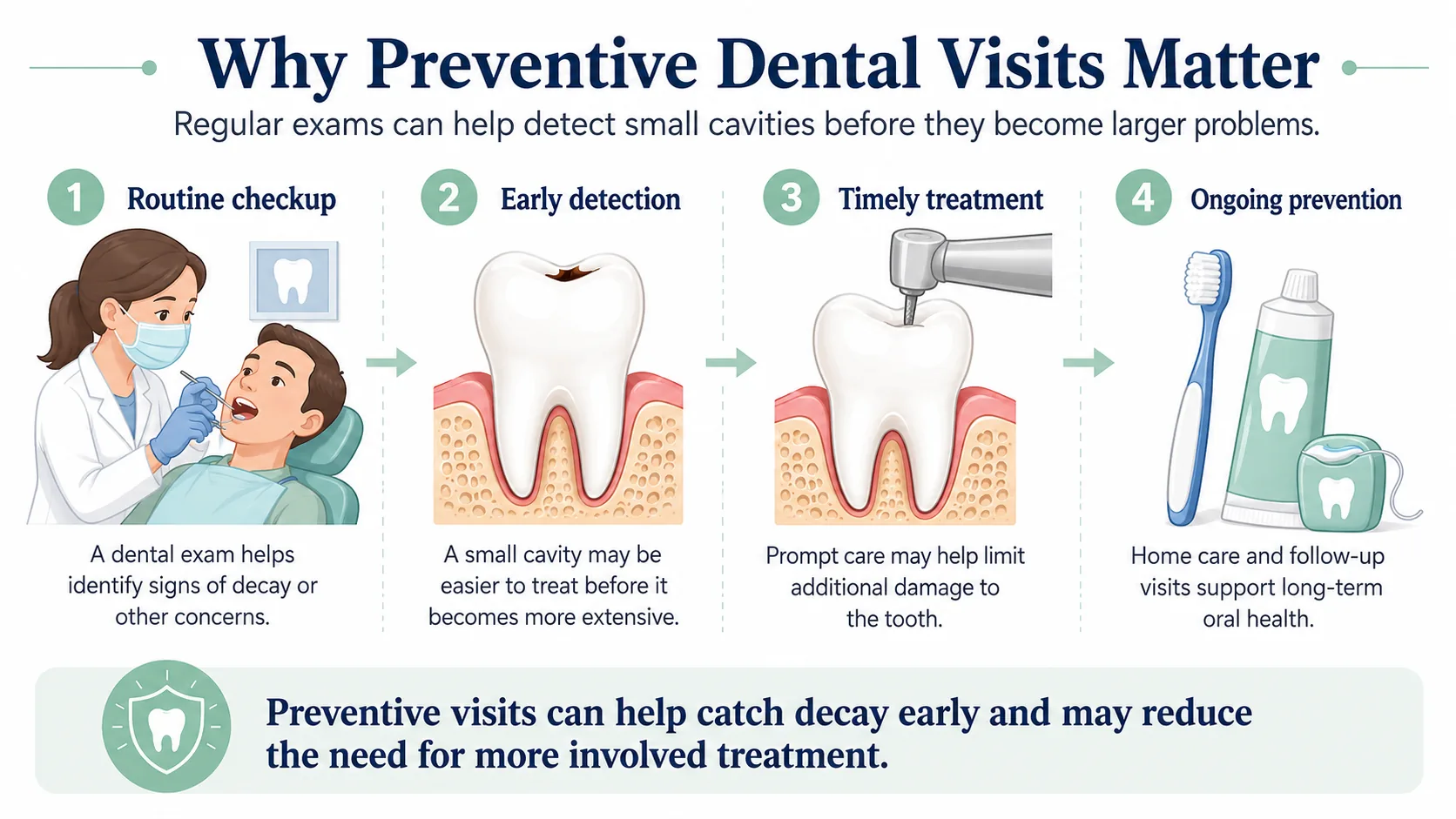
Do Waiting Periods Apply to Fillings?
They can.
Some dental plans require a waiting period before certain adult restorative services become eligible for benefits.
This can be particularly important for people buying individual or family dental insurance because preventive services and restorative services may not always become eligible at the same time.
HealthCare.gov specifically warns consumers that separate Marketplace dental plans can have waiting periods before they begin covering some adult services.
If your coverage recently started, confirm:
- Whether fillings are subject to a waiting period
- When the waiting period began
- When restorative benefits become available
- Whether the plan has any provisions concerning prior coverage
- Whether different services have different waiting-period rules
Do not assume that immediate eligibility for preventive care means fillings are also immediately eligible.
For a complete explanation, read How Waiting Periods Work in Dental Coverage.
What If You Already Have a Cavity When You Enroll?
A cavity diagnosed before enrollment does not, by itself, tell you whether a future filling will receive benefits.
The answer depends on the plan.
Relevant provisions may include:
- The coverage effective date
- Waiting-period rules
- Exclusions and limitations
- Treatment-in-progress provisions, if the plan has them
- Other eligibility or benefit provisions
Dental benefit plans can contain pre-existing-condition or other coverage limitations, although the exact provisions and situations to which they apply vary.
If a dentist has already recommended treatment and you are considering new dental coverage, review the actual plan documents instead of assuming that enrolling will automatically make the filling eligible for benefits.
For the broader pre-enrollment framework when a dental problem already exists or treatment has already been recommended, read Dental Insurance and Existing Dental Problems: What to Check Before Enrolling.
Are Replacement Fillings Covered by Dental Insurance?
They may be.
Replacing an existing filling can involve benefit rules that do not apply in exactly the same way to a first restoration.
A plan may have:
- Frequency limitations
- Replacement limitations
- Documentation requirements
- Other conditions for providing another benefit for the same tooth
The exact rules are plan-specific.
Replacing a Damaged or Failing Filling
A dentist may recommend replacing an existing restoration because it is broken, worn, fractured, no longer functioning adequately, or because new decay is present.
The dental plan then determines whether another benefit is available under its contract.
Before treatment, consider asking:
- Is replacement of this filling eligible for benefits?
- Is there a frequency or replacement limitation?
- Does the plan require documentation?
- Does the reason for replacement affect the available benefit?
- Does the filling material affect how the benefit is calculated?
Replacing a Functional Filling Mainly for Appearance
Coverage can be different when an existing filling is still functioning and the primary reason for replacing it is cosmetic.
Dental plans can contain exclusions or limitations that affect services performed primarily for appearance.
If appearance is the main reason for changing the restoration, do not assume that the plan will provide the same benefit it would provide for a restoration that needs replacement because of its condition.
Check the plan before treatment.
A Frequency Limit Is Not a Clinical Treatment Rule
An insurance frequency limitation tells you whether the plan may provide another benefit.
It does not determine whether a filling clinically needs repair or replacement.
The condition of the tooth and restoration is a clinical matter to discuss with the dentist.
Insurance determines benefits under the plan. It does not replace the dentist-patient treatment decision.
For the separate recurring-service framework, read Dental Insurance Frequency Limits Explained: What to Check Before Treatment.
Can Filling Material Affect Dental Insurance Coverage?
Yes, under some plans.
Different restorative materials do not always receive identical insurance benefits.
A plan may provide a benefit for the restoration selected by the dentist and patient, or it may calculate its payment using an alternative covered restoration.
One benefit provision that can affect this calculation is sometimes called a Least Expensive Alternative Treatment, or alternate-benefit provision.
The ADA explains that under a LEAT provision, a plan may base its payment on a less expensive covered alternative while the patient can still receive the treatment selected with the dentist and may be responsible for the difference allowed under the applicable arrangement.
A commonly discussed restorative example involves a plan calculating a posterior composite filling benefit according to an amalgam restoration.
This does not mean the dental plan determines which material is clinically appropriate.
It means the plan’s financial contribution may be based on a different covered option.
Before treatment, consider asking:
- Is the recommended filling material covered?
- Could an alternate-benefit provision apply?
- Does the rule differ according to tooth location?
- Would the selected material change my expected patient responsibility?
For a closer look at how composite restorations may be calculated when an alternate benefit applies, read Composite vs Amalgam Fillings: How Dental Insurance May Calculate Benefits.
What If the Filling Is Part of Root Canal Treatment?
A filling may sometimes be part of the restorative treatment provided after a root canal.
For insurance purposes, the root canal and the restoration afterward should be reviewed separately. Coverage for the endodontic procedure does not automatically establish coverage for the filling, and coverage for the filling does not determine how the root canal itself will be handled.
If root canal treatment is part of the treatment plan, review Does Dental Insurance Cover Root Canals? to understand how the endodontic procedure, treating provider, network status, and final restoration may be evaluated separately.
Questions to Ask About Fillings Before Enrolling in a Dental Plan
If you are comparing plans and filling coverage matters to you, asking specific questions can be more useful than looking only for the word covered.
Consider asking:
- Are fillings covered under this plan?
- How does the plan classify restorative fillings?
- Does the deductible apply to fillings?
- What copay, coinsurance, or other cost-sharing applies?
- Is there a waiting period before restorative benefits become available?
- Are replacement fillings subject to frequency or replacement limitations?
- Can filling material affect the benefit?
- Could an alternate-benefit provision apply?
- Do plan payments for fillings count toward the annual maximum?
- Does using an out-of-network dentist change the benefit?
- Where can I find these rules in the official plan documents?
Filling coverage should still be considered as one part of the overall dental plan, not the only factor used to compare coverage.
If you are comparing several options, see How to Compare Dental Plans Online and use the Dental Plan Comparison Checklist to review the plan more broadly.
Where to Find Filling Coverage in Your Plan Documents
A short benefits summary can be useful for identifying whether a plan includes restorative care, but the more detailed documents usually contain the rules needed to understand the benefit.
Depending on the type of coverage, look for documents or sections such as:
Schedule of Benefits
This may show how the plan classifies fillings and what cost-sharing applies to that category.
Certificate of Coverage or Policy
This can provide more complete information about covered services, exclusions, limitations, and plan definitions.
Restorative or Basic Services Section
Look for language describing fillings, restorations, or basic restorative care.
Exclusions and Limitations
This section can identify circumstances in which a benefit is reduced, unavailable, or subject to additional requirements.
Waiting-Period Provisions
If the plan has waiting periods, confirm whether restorative services are affected and when the benefit becomes available.
Frequency and Replacement Limitations
These provisions are particularly important if you already have fillings that may need replacement.
Alternate-Benefit Provisions
Look for language explaining whether the plan may base its payment on an alternative covered treatment or material.
Provider Network Information
Confirm that the dentist participates in the specific network connected to your plan, rather than assuming that accepting the insurance company generally means the dentist is in your network.
A summary saying that fillings are covered is a useful starting point. The detailed plan documents help explain what that coverage actually means.
Should You Request a Pre-Treatment Estimate for a Filling?
A formal pre-treatment estimate may not be necessary for every straightforward filling.
However, it can be useful when:
- Several fillings are planned
- An existing filling is being replaced
- Material coverage is unclear
- The dentist is out of network
- Your deductible status is uncertain
- Your remaining annual maximum is limited or unclear
- A waiting period or other limitation may apply
- Your expected patient responsibility is unclear
A pre-treatment estimate can help show how the plan expects to process the proposed treatment based on the information available at that time.
However, it should not automatically be treated as a promise of final payment.
The ADA notes that pre-authorization may not guarantee payment because eligibility, available benefits, time limitations, and other circumstances can change before treatment.
Ask the dental office or plan what type of pre-treatment review is available and what the result does—and does not—confirm.
For the full pretreatment-review framework, read Dental Insurance Predetermination vs Preauthorization: What’s the Difference?
Questions to Ask Before Getting a Filling
Once you already have dental coverage and a dentist has recommended a filling, the questions become more specific.
Consider confirming:
- What restoration is being recommended?
- Which tooth is being treated?
- How many surfaces are involved?
- Is this a new filling or a replacement?
- Is the proposed filling covered under my current plan?
- How is the service classified?
- Does the deductible apply?
- What cost-sharing will apply?
- Is the dentist in my exact dental network?
- Is there an applicable waiting period?
- Does a replacement or frequency limitation apply?
- Could filling material change the benefit?
- Could an alternate-benefit provision apply?
- How much annual benefit remains?
- Would a pre-treatment estimate be useful?
These questions usually provide more useful information than asking only:
“What percentage does my insurance cover?”
A percentage alone does not necessarily tell you what amount the percentage is applied to or which other plan provisions affect the final claim.
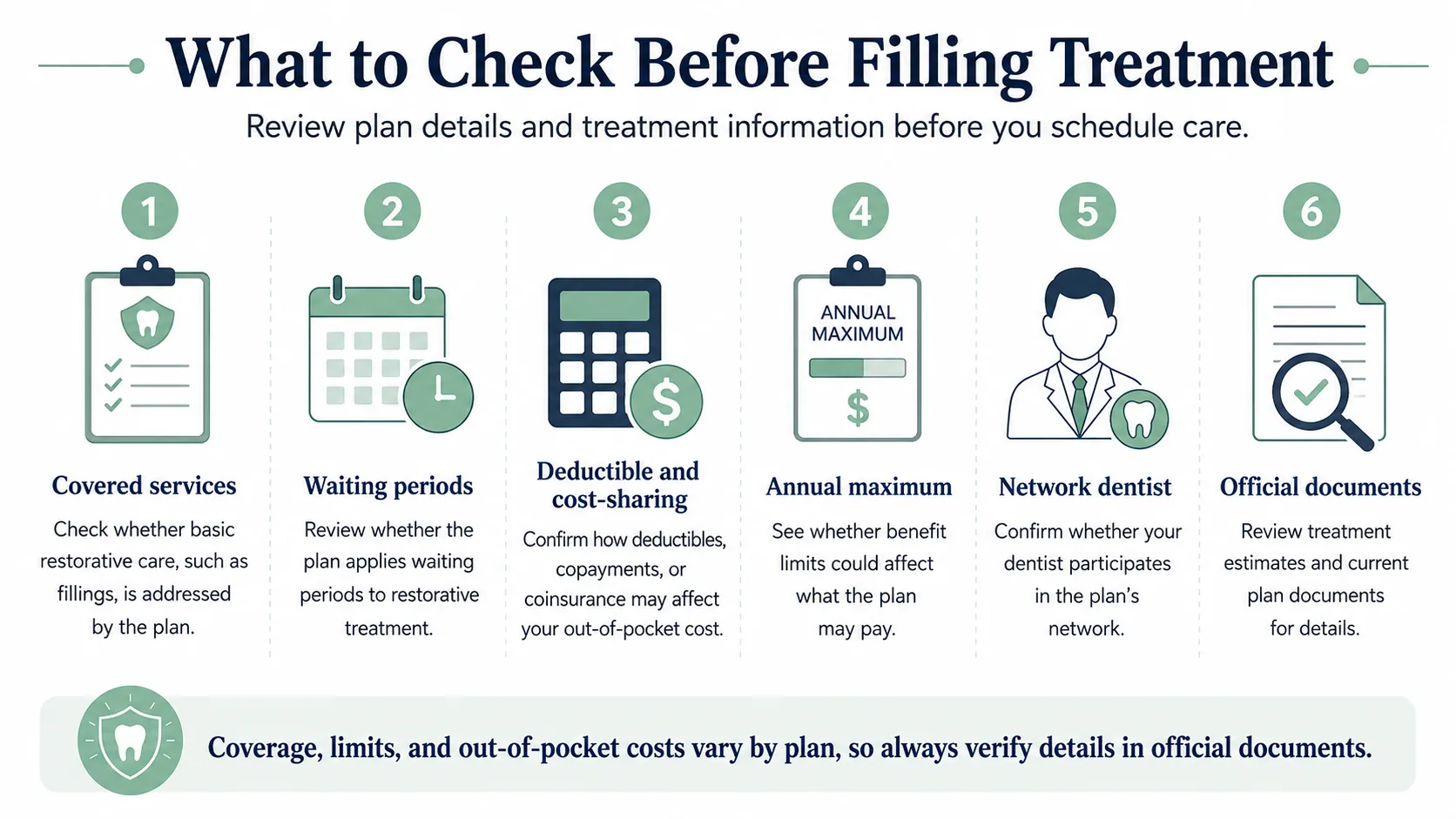
Does the Type of Dental Coverage Matter?
The same basic coverage questions can apply to fillings under individual, family, employer-sponsored, and Marketplace dental coverage.
However, where you obtain the coverage can affect which plan documents you need to review.
Individual and Family Dental Plans
For coverage purchased directly, review the Schedule of Benefits, policy or certificate of coverage, provider network, exclusions, and limitations.
Pay particular attention to:
- Restorative benefits
- Deductible and cost-sharing
- Waiting periods
- Annual maximum
- Network rules
- Replacement limitations
- Material-related provisions
If several family members are enrolled, remember that their treatment circumstances can be different even when they share the same family policy.
Employer-Sponsored Dental Coverage
Employer-sponsored dental benefits can also contain deductibles, cost-sharing, annual maximums, networks, and treatment limitations.
For employment-based plans subject to applicable federal requirements, the U.S. Department of Labor describes the Summary Plan Description as an important document explaining what the plan provides and how it operates.
Review the materials supplied for your actual employer plan rather than relying on another employee’s claim experience.
Marketplace Dental Coverage
In the Health Insurance Marketplace, dental coverage can be offered as part of a health plan or through a separate dental plan.
HealthCare.gov also notes that separate Marketplace dental plans can have waiting periods before they cover some services for adults.
If you are reviewing Marketplace coverage, check:
- Whether dental coverage is embedded or separate
- Whether adult restorative services are covered
- Any applicable waiting period
- Deductible and cost-sharing
- Provider network
- Benefit limitations
Do not assume that every Marketplace dental option uses the same benefit structure.
How to Read the Explanation of Benefits After a Filling
After the claim is processed, review your Explanation of Benefits, or EOB.
Depending on the plan, the EOB can help you identify:
- The dentist’s submitted charge
- The plan allowance
- Any deductible applied
- Plan payment
- Patient responsibility
- Non-covered or limited amounts
- Explanations or remarks about how the claim was processed
The ADA explains that an EOB communicates the benefits determination and can distinguish between plan payment, deductible, coinsurance, patient payment, and other amounts.
An EOB is not itself a bill from the dentist.
Compare it with the dental office statement.
If an amount is different from what you expected, contact the dental office and the plan for clarification rather than assuming immediately that either document is incorrect.
For detailed interpretation of the processed claim result, read How to Read a Dental Insurance EOB: Payments, Adjustments, and Patient Responsibility.
How to Interpret “Fillings Covered” in a Dental Plan
When a plan states that fillings are covered, interpret that as the beginning of the coverage review rather than the final answer.
The statement generally tells you that qualifying fillings may receive a benefit under the plan.
It does not necessarily tell you:
- How much the plan will pay
- Whether the deductible applies
- What allowed amount will be used
- What your copay or coinsurance will be
- Whether network status changes your cost
- Whether a waiting period applies
- How several fillings will affect the annual maximum
- Whether a replacement limitation applies
- Whether the filling material changes the benefit
If treatment has already been recommended, also confirm the teeth and surfaces involved and whether any restoration is replacing an existing filling.
The goal is not to predict a dental claim from a single coverage percentage.
It is to understand the rules your plan will use when evaluating the specific restoration being proposed.
When comparing dental plans, review filling coverage together with the plan’s overall costs, provider network, waiting periods, annual maximum, exclusions, and other benefits that may matter to you.
What Dental Insurance Does Not Decide
Dental insurance determines whether and how a plan provides financial benefits under its contract.
It does not determine which clinical treatment is appropriate for you.
A plan paying less than expected does not automatically mean the treatment recommended by your dentist is unnecessary.
Likewise, a procedure being eligible for benefits does not mean it is the right treatment for every patient.
Clinical decisions belong in the dentist-patient discussion.
Insurance determines how the dental plan contributes financially.
Helpful Resources
- Dental Procedure Coverage
- Does Dental Insurance Cover Root Canals?
- Dental Insurance Costs Explained
- In-Network vs Out-of-Network Dental Insurance
- Dental Insurance Annual Maximums Explained
- How Waiting Periods Work in Dental Coverage
- How to Compare Dental Plans Online
- Dental Plan Comparison Checklist
- Compare Dental Plans
- Dental Insurance Learning Center
Frequently Asked Questions
Does dental insurance usually cover fillings?
Many dental insurance plans provide benefits for fillings as restorative dental care. However, coverage depends on the specific plan, and deductibles, cost-sharing, waiting periods, network rules, annual maximums, replacement limitations, and other provisions can affect the final benefit.
Are fillings considered basic dental services?
Fillings may be classified as basic or restorative services, but benefit categories vary between plans. Check your Schedule of Benefits or other official plan documents rather than assuming that every dental plan uses the same classification.
Does my deductible apply to a filling?
It may. Some plans apply a deductible to restorative services such as fillings. Check whether the filling is subject to your deductible and whether any applicable deductible remains.
Does dental insurance pay the full cost of a filling?
Not necessarily. A plan may calculate its benefit from an allowed or contracted amount and then apply the deductible, copay, coinsurance, annual maximum, or other provisions.
Are multiple fillings covered at the same time?
They may be, but different restorations can involve different teeth and numbers of tooth surfaces. They should not automatically be assumed to produce identical insurance benefits. Plan payments for several fillings can also reduce the annual benefit remaining.
Does dental insurance cover replacement fillings?
It may. Replacement fillings can be subject to frequency limitations, replacement rules, documentation requirements, or other plan provisions.
Can dental insurance cover a cavity diagnosed before enrollment?
A diagnosis made before enrollment does not by itself determine whether a future filling will receive benefits. Review the plan’s effective date, waiting periods, exclusions, limitations, and any other relevant provisions.
Can a waiting period apply to fillings?
Yes. Some dental plans apply waiting periods before certain adult restorative services become eligible for benefits. Check the plan terms if your coverage recently started.
Does using an out-of-network dentist change filling coverage?
It can. Out-of-network treatment may involve different allowed amounts, different cost-sharing, or additional patient responsibility depending on the plan.
Does filling material affect dental insurance coverage?
Sometimes. A plan may apply an alternate-benefit provision or calculate its contribution using another covered restorative option. Confirm how the specific material recommended by your dentist will be handled.
Does a filling count toward the dental annual maximum?
If the plan payment for the filling is subject to the annual maximum, that payment can reduce the benefit available for other covered care during the same benefit period.
Is a pre-treatment estimate a guarantee that dental insurance will pay?
Not necessarily. A pre-treatment estimate can help clarify the expected benefit, but eligibility, remaining benefits, time limitations, and other circumstances may change before treatment.
What should I check about filling coverage before choosing a dental plan?
Check whether fillings are covered, how restorative services are classified, whether a deductible or waiting period applies, how network status affects benefits, whether replacement fillings have additional limitations, whether filling material can change the benefit, and how plan payments interact with the annual maximum.
Review these details together with the rest of the plan rather than choosing dental coverage based on filling benefits alone.
What to Remember Before Treatment
Knowing that a dental plan covers fillings is useful, but it is not the complete answer.
Before treatment, try to understand:
- The exact restoration being recommended
- Whether it is a new or replacement filling
- The teeth and surfaces involved
- How your plan classifies the service
- Whether the deductible and cost-sharing apply
- Whether the dentist is in your network
- Whether a waiting period affects eligibility
- How much annual benefit remains
- Whether replacement or material-related limitations apply
For information about how dental insurance may apply to fillings and other dental procedures, visit Dental Procedure Coverage.
Sources
- American Dental Association — Glossary of Dental Terms
- American Dental Association — How to Read Your Explanation of Benefits Statement
- American Dental Association — An Introduction to Dental Benefits
- American Dental Association — Dental Plan Benefits & Limitations
- American Dental Association — Pre-Authorizations
- American Dental Association — Least Expensive Alternative Treatment Clause
- American Dental Association — ADA Dental Claim Form
- HealthCare.gov — Dental Coverage in the Marketplace
- U.S. Department of Labor — Plan Information
About the Author
Maria Dumitru is the Founder and Content Editor of Dental Coverage Hub. She researches and edits educational content designed to help U.S. consumers understand dental insurance terms, compare plan features, and verify important information before enrolling.
Learn more about our standards in the Editorial Policy and How We Review Dental Plans.
This article is for general educational purposes and does not provide dental, medical, insurance, or legal advice. Dental benefits, exclusions, limitations, costs, and eligibility rules vary by plan. Always review your official plan documents or contact your dental plan for information about your specific coverage. Questions about diagnosis or treatment should be discussed with a licensed dental professional. Dental Coverage Hub is an independent educational publisher and is not an insurance company, broker, agent, dental provider, or enrollment platform.

Understand How Dental Procedure Coverage Works
Fillings are only one type of dental treatment that may be affected by deductibles, plan limitations, networks, and other benefit rules. Explore how dental insurance may apply to other common dental procedures.