Preventive Dental Care: What It Includes and How Insurance Covers It
Understand which services may be preventive or diagnostic, why coverage can vary, and what to check before your next dental visit.
Written and researched by Maria Dumitru.
Founder and Content Editor at Dental Coverage Hub
Last reviewed: October 2026
Preventive dental care supports oral health through professional services and daily habits. For someone using dental insurance, the practical question is which services the plan will consider eligible and what costs may remain.
An appointment can include an examination, cleaning, X-rays, or other services with different benefit rules. Reviewing the visit as one preventive package can overlook those differences.
What You’ll Learn
- Which professional services may be preventive or diagnostic
- How routine cleanings differ from periodontal care
- Why clinical recommendations and insurance frequency limits are separate
- What can affect benefits and patient costs
- What to confirm before the visit and check afterward
For the broader introduction to plan types and benefit terms, start with Dental Insurance Basics.
Quick Answer
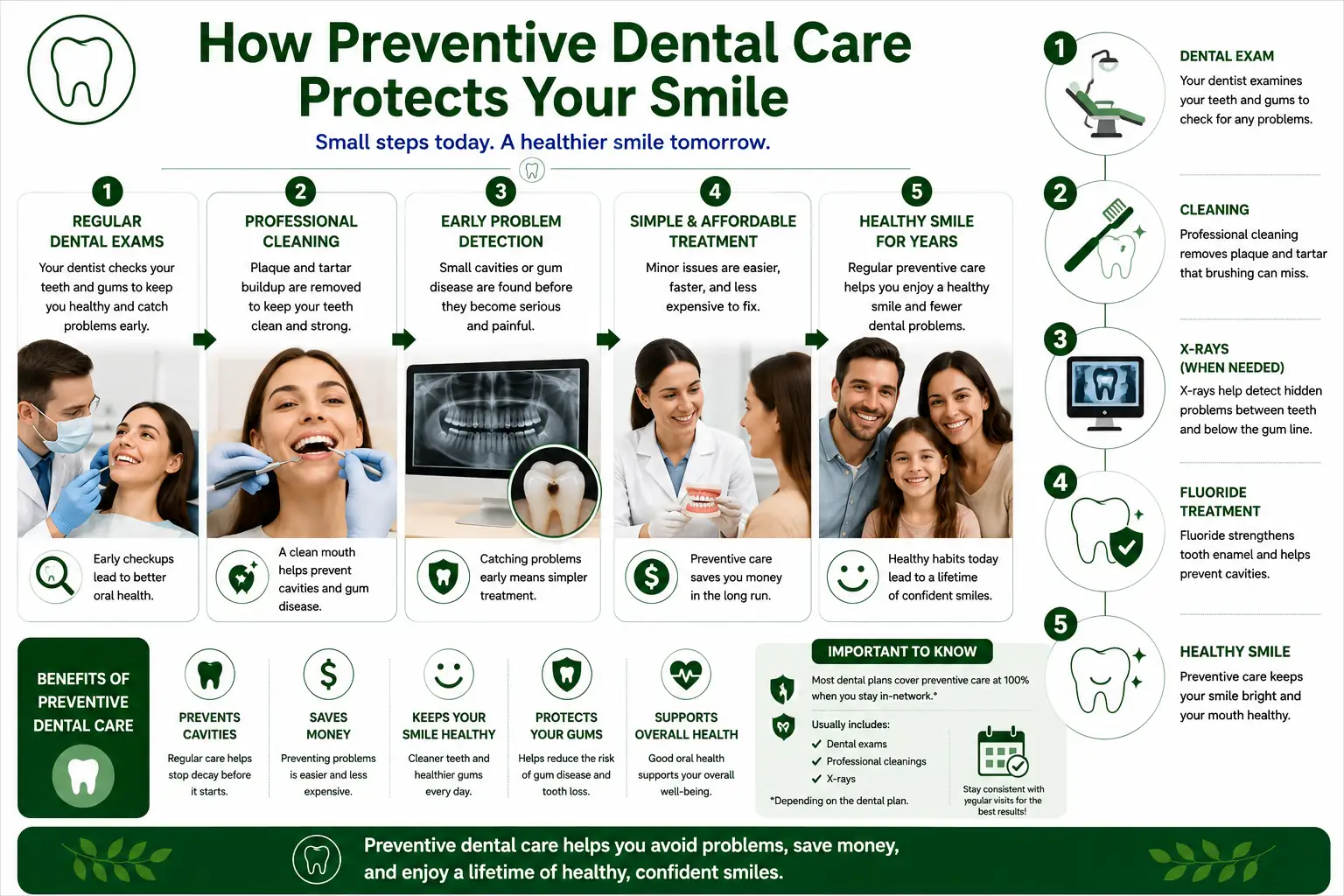
Preventive dental care includes daily oral care and professional services intended to help protect oral health. Dental exams and X-rays may be classified as diagnostic, while routine cleanings, fluoride applications, and sealants may fall under preventive benefits.
A preventive label does not establish that every service at the visit will be fully paid. Check the procedure, coverage dates, dentist network, frequency and age rules, and applicable patient charges. Your dental professional recommends care; your plan determines benefits under its terms.
Key Takeaways
- Professional care and daily oral hygiene have related roles, but dental benefits generally concern eligible professional services
- Exams, cleanings, and X-rays can follow different benefit rules within the same appointment
- Routine cleaning, scaling and root planing, and periodontal maintenance are different procedures
- A clinical recommendation does not automatically establish insurance payment
- Verify each expected service and its estimated patient cost before relying on preventive benefits
In This Guide
Professional Preventive Services vs Daily Oral Care
Professional care may include evaluating the teeth and gums, providing an appropriate cleaning, taking diagnostic images when needed, and recommending measures to help prevent cavities or other problems.
Daily care includes brushing with fluoride toothpaste, cleaning between the teeth, and following individualized advice about oral hygiene, diet, or appliance care. These habits support oral health but do not replace professional evaluation.
Insurance coverage is a separate matter. Do not assume that a home-care product or activity qualifies for a benefit simply because it supports prevention. Check what the plan actually includes.
What May Be Included in a Preventive Dental Visit?
Not every patient needs every service at every appointment. Ask what is recommended for you and which procedures the office expects to perform.
| Service | What it involves | What to check with the plan |
|---|---|---|
| Oral evaluation | Assessment of oral health and findings that may need attention | Evaluation type, procedure code, benefit category, and frequency rule |
| Routine cleaning | Removal of plaque, tartar, and surface deposits | Whether routine cleaning is the recommended procedure and how its benefit is limited |
| Diagnostic X-rays | Images used to evaluate concerns not fully visible during an examination | Image type, prior imaging history, and applicable frequency rules |
| Professional fluoride | A professional application intended to help prevent cavities | Age, frequency, and other eligibility conditions |
| Dental sealants | Protective material applied to selected tooth surfaces | Eligible teeth, age rules, previous treatment, and replacement provisions |
Exams and X-Rays May Be Diagnostic
A plan may group diagnostic and preventive services together or list them separately. Even within a combined category, an evaluation and an X-ray can have different rules.
A periodic evaluation, a comprehensive examination, and a problem-focused examination should not automatically be treated as interchangeable benefits.
X-rays also differ by type. The dentist should determine whether imaging is appropriate using your clinical findings, history, risk, and available previous images. An insurance allowance is not a reason by itself to obtain new images.
Routine Cleaning Is Different From Periodontal Care
A routine cleaning is not the same procedure as scaling and root planing or periodontal maintenance. These services address different clinical circumstances and may receive different benefits.
If the office recommends periodontal care, ask which procedure is planned, why it is recommended, and what the plan says about that service. Do not use the routine-cleaning benefit to estimate the cost of a different procedure.
Fluoride and Sealants Need Their Own Checks
Fluoride applications and sealants may be recommended to help prevent cavities. However, the plan may apply age, frequency, or tooth-specific conditions.
A service recommended for an adult is not automatically payable under a benefit limited to younger members. Likewise, a sealant benefit for one tooth does not establish eligibility for every tooth.
How Often Should You Receive Preventive Dental Care?
Discuss the timing of visits and individual services with your dental professional. Current oral health, previous treatment, symptoms, and risk factors can affect the recommendation.
Clinical timing and insurance frequency are separate questions.
The dentist may recommend a service sooner or more often than the plan provides a benefit. The service can still be clinically appropriate, but you may have additional costs.
Ask the plan how it counts the relevant service and which prior dates it is using. Do not assume a benefit-year reset makes every procedure eligible again, or that changing dentists removes previous service history.
For the detailed timing rules, read Dental Insurance Frequency Limits Explained: What to Check Before Treatment.
If symptoms arise before your next covered visit, contact the dental office about appropriate care and costs instead of waiting solely for an insurance date.
Why Preventive Dental Care May Still Leave a Bill
A plan may provide favorable benefits for selected preventive services while leaving charges for other services at the same visit.
For example, an appointment may include an eligible routine cleaning and an X-ray that does not satisfy the plan’s frequency rule. The cleaning benefit does not determine the X-ray benefit.
The Exact Dentist and Network Matter
Confirm participation for the dentist, office location, and specific network. An office that accepts an insurance company may not participate in every plan that company offers.
Out-of-network rules can affect the recognized fee, patient charges, and whether any benefit is available. Use In-Network vs Out-of-Network Dental Insurance for the full comparison.
Deductibles and Patient Charges Can Differ
Some plans waive a deductible for selected preventive or diagnostic services; others apply different terms. Check the applicable copay or coinsurance and the fee used to calculate benefits.
A displayed coverage percentage does not necessarily apply to the dentist’s entire charge. Also ask whether the visit includes additional services outside the stated preventive benefit.
Annual Maximum Treatment Varies
Where a plan uses an annual benefit maximum, ask whether preventive and diagnostic payments count toward it. Do not assume that these services are excluded from the maximum or remain payable after other benefits are exhausted.
For the broader framework, read Dental Insurance Annual Maximums Explained.
Coverage Dates and Waiting Periods Are Separate
Confirm when your dental coverage becomes effective and whether a waiting period applies to the proposed service.
A statement that preventive benefits are available immediately should be checked against the actual start date and procedure rules. Review How Waiting Periods Work in Dental Coverage if the timing is unclear.
What to Check Before Your Appointment
Use the dental office for information about the recommended care and the plan for information about the applicable benefits. Keep the answers together so you can compare them.
Identify the Expected Services
Ask the office for the procedure names, codes, and estimated charges. Clarify whether the appointment involves a routine cleaning, periodontal care, or another service.
If the examination identifies additional care, ask the office to explain the proposed service and any updated estimate before proceeding when practical.
Confirm the Benefits for Each Service
Using the exact plan documents and current benefit information, verify:
- Your coverage and the relevant service date
- The dentist and location’s network status
- The applicable frequency rule and prior service dates
- Any age, tooth, or other service restrictions
- Deductible, copay, or coinsurance requirements
- Annual maximum treatment, if applicable
A general statement that preventive care is covered does not answer all of these questions.
Request an Itemized Patient Estimate
Ask the office to separate the expected insurance benefit from your estimated responsibility for each procedure. Identify any charge based on an assumption that still needs confirmation.
An estimate helps you prepare, but it is not a guarantee of final payment. Keep the estimate and relevant benefit information, including the date and source of any clarification.
What If the Visit Identifies Other Treatment?
An examination may reveal a need for a filling, periodontal treatment, a crown, or another procedure. The benefit for the examination does not establish coverage for the recommended treatment.
Ask for a separate treatment plan and review the proposed procedures under their own benefit rules. Waiting periods, exclusions, replacement provisions, or other conditions may become relevant.
For explanations organized by treatment, use Dental Insurance Coverage for Common Procedures.
What to Check After the Visit
If the plan issues an Explanation of Benefits, compare it with the office statement and any payments you have already made.
Check the procedures, plan payment, adjustments, patient responsibility, and explanation codes. If something differs from the estimate, ask whether the reason involves the submitted service, eligibility, a benefit limit, or another plan provision.
An EOB is not a bill. For help reading it, use How to Read a Dental Insurance EOB.
How to Interpret Preventive Dental Benefits
Useful preventive benefits should be assessed against the services you expect, the professionals you can access, and the costs that remain.
Strong benefits for a routine cleaning do not establish that every examination, image, fluoride application, or periodontal service receives the same treatment.
When comparing plans, consider preventive benefits alongside coverage for other care you may need. Avoid choosing solely from a preventive coverage percentage or a promise of routine visits.
Our Recommendation
Start with the services your dental professional recommends. Confirm the benefits and estimated patient charges for those services under your exact plan.
Keep clinical recommendations, insurance eligibility, and estimated costs clear in your records. This makes it easier to prepare for the visit and understand any differences after processing.
Helpful Resources
- Dental Insurance Basics
- Dental Insurance Frequency Limits Explained
- In-Network vs Out-of-Network Dental Insurance
- How Waiting Periods Work in Dental Coverage
- Dental Insurance Annual Maximums Explained
- Dental Plan Comparison Checklist
Frequently Asked Questions
What is preventive dental care?
It includes professional services and daily habits intended to help protect oral health. Dental insurance generally considers benefits for eligible professional services listed in the plan, rather than every activity or product used for prevention.
Are exams and X-rays preventive services?
They may be classified as diagnostic or grouped with preventive benefits. Check the exact procedure and its rules, even when the plan uses a combined diagnostic and preventive category.
Is a routine cleaning covered the same way as periodontal care?
Not necessarily. Routine cleaning, scaling and root planing, and periodontal maintenance are different procedures. Confirm the recommended service before using a cleaning benefit to estimate your cost.
Does dental insurance pay the full cost of preventive care?
It may pay the full eligible amount for selected services, but that does not guarantee a visit without patient charges. Network rules, deductibles, frequency limits, and additional procedures can affect the result.
Can I use preventive benefits as soon as coverage starts?
Check the plan and procedure. Some benefits may be available without a waiting period, while frequency, age, and other conditions can still apply. Verify the coverage effective date separately.
Are fluoride applications and sealants covered for adults?
That depends on the plan. Review age requirements and other procedure-specific conditions. A clinical recommendation for an adult does not automatically establish an insurance benefit.
How often should I have preventive visits or X-rays?
Ask your dental professional about the schedule appropriate for your oral health and previous care. Check insurance frequency rules separately; they do not determine clinical need.
Do preventive visits guarantee that I will not need other treatment?
No. Preventive and diagnostic care can support oral health and help identify concerns, but future treatment may still be necessary. Review benefits for additional recommended procedures separately.
Sources
- Centers for Disease Control and Prevention — Oral Health Tips for Adults
- Centers for Disease Control and Prevention — About Dental Sealants
- Centers for Disease Control and Prevention — About Fluoride
- American Dental Association — X-Rays and Radiographs
- American Dental Association — Typical Dental Plan Benefits and Limitations
About the Author
Maria Dumitru is the Founder and Content Editor of Dental Coverage Hub. She researches and edits educational content designed to help U.S. consumers understand dental insurance terms, compare plan features, and verify important information before enrolling.
Learn more about our standards in the Editorial Policy and How We Review Dental Plans.
Disclaimer
This article provides general educational information and is not dental, medical, legal, financial, or personalized insurance advice. Recommended care and insurance benefits depend on individual circumstances and the applicable plan. Consult your dental professional about treatment and verify coverage, restrictions, and costs with the insurer or plan administrator and dental office.
Compare Preventive Benefits With the Rest of the Plan
Use the same expected services and provider requirements when reviewing your options. Compare preventive benefits alongside patient costs, other treatment benefits, and plan limitations.