
🟢 Beginner Friendly
🇺🇸Built for U.S. Consumers
🟢 Updated 2026

Dental Insurance for Different Life Stages and Work Situations
Explore dental coverage considerations for families, seniors,
retirees, self-employed individuals and small business owners.
What You’ll Learn
Dental coverage needs can change as your family, age, employment and financial situation change.
A plan that works well for an individual may not provide the same value for a family with children, a retiree leaving employer-sponsored coverage, a self-employed professional or a small business owner considering benefits for employees.
This guide explains which dental plan features may matter most in different situations and connects you with detailed resources for families, seniors, retirees, self-employed individuals and small business owners.
Quick Answer: How Do Dental Coverage Needs Change?
The basic features of dental insurance are similar for most consumers, but the priorities can be very different.
Families may focus on dependent eligibility, preventive care and orthodontic benefits. Seniors may place greater importance on major services such as crowns, dentures and implants. Retirees may need to replace coverage previously provided by an employer.
Self-employed individuals often need to purchase coverage independently, while small business owners may be comparing individual coverage with employee benefit options.
The most useful plan is not necessarily the plan with the lowest monthly premium. It is the plan whose coverage, costs, network and limitations better match the people who will use it.
Find Dental Coverage for Your Situation
Start with the guide that most closely reflects your current situation.
Dental Insurance for Families
Families may need coverage for more than one person, including adults, children and other eligible dependents. Important features may include:
- Dependent eligibility rules
- Preventive care for children and adults
- Orthodontic benefits
- Family deductibles
- Annual maximums
- Pediatric dental coverage
- Provider access for multiple family members
A family should also check whether all preferred dentists and orthodontists participate in the same network.
Dental Insurance for Seniors
Older adults may expect a greater need for restorative and major dental care. Features worth reviewing may include:
- Coverage for crowns and dentures
- Dental implant eligibility
- Periodontal treatment
- Annual benefit maximums
- Waiting periods
- Replacement frequency limits
- Access to preferred dentists and specialists
Age alone does not determine which plan is best. Current oral health, expected treatment and access to providers are usually more useful comparison factors.
Dental Insurance for Retirees
Retirement can change how a person receives dental benefits. Someone leaving employer-sponsored coverage may need to compare:
- Individual dental insurance
- Coverage available through a spouse
- Retiree benefit options
- Medicare Advantage dental benefits
- Dental savings plans
- Direct payment and dental office membership options
Original Medicare generally does not cover most routine dental services. Retirees should verify exactly what dental benefits are included in any plan they are considering.
Dental Insurance for Self-Employed Individuals
Freelancers, independent contractors and sole proprietors may need to arrange dental coverage without help from an employer. Important comparison points may include:
- Monthly premiums
- Deductibles
- Annual maximums
- Waiting periods
- PPO or HMO networks
- Individual versus family enrollment
- Dental insurance versus savings plans
- Expected yearly dental needs
Self-employed consumers should compare the complete annual cost rather than evaluating a plan only by its monthly premium.
Dental Insurance for Small Business Owners
Small business owners may be considering coverage for themselves, their families or their employees. Questions to review may include:
- Is the coverage for the owner only or for employees?
- How many people need coverage?
- Will the business contribute toward premiums?
- Which dentists participate in the network?
- Are preventive, basic and major services included?
- Are waiting periods or participation rules applied?
- How will new employees become eligible?
- Are individual plans a better fit than group coverage?
The appropriate structure depends on the size of the business, employee needs, budget and plan availability.
Quick Comparison by Life Stage and Work Situation
| Situation | Common priorities | Important limitations to review |
|---|---|---|
| Families | Dependents, preventive care, orthodontics | Family deductibles, age limits, lifetime orthodontic maximums |
| Seniors | Major and restorative treatment | Waiting periods, annual maximums, replacement limits |
| Retirees | Replacing employer coverage | Medicare limitations, network access, total annual cost |
| Self-employed | Individually purchased coverage | Premiums, waiting periods, deductibles, provider network |
| Small business owners | Owner and employee benefits | Participation rules, contribution costs, eligibility requirements |
This table provides a general educational overview. Coverage, eligibility and plan rules can vary by provider, location and contract.
Features Everyone Should Compare
Although each audience has different priorities, several plan features are important in almost every situation.
Covered Services
Review which preventive, basic, major and orthodontic services are included. Do not assume that a procedure is covered simply because a plan is described as comprehensive.
Monthly Premium
The premium is the recurring amount paid to keep coverage active. A low premium may be attractive, but it should be evaluated together with deductibles, copayments, coinsurance and coverage limits.
Deductible
A deductible is the amount a member may need to pay before certain benefits begin. Some plans use individual deductibles, while family coverage may also apply a family-level deductible.
Annual Benefit Maximum
The annual maximum is the most the dental plan may pay toward eligible services during a benefit year. Families should check whether maximums apply separately to each covered person.
Waiting Periods
Some plans require members to wait before benefits become available for basic, major or orthodontic treatment. The waiting period may differ by service category.
Provider Network
Check whether preferred dentists and specialists participate in the plan. Families and business owners may need a network that works for several people in different locations.
Orthodontic Benefits
Orthodontic benefits may have:
- Age restrictions
- Separate waiting periods
- Lifetime maximums
- Network requirements
- Treatment eligibility rules
These details can be especially important for families with children or adults considering braces or Invisalign.
Frequency and Replacement Limits
Plans may limit how often they contribute toward services such as:
- Dental exams
- X-rays
- Crowns
- Dentures
- Other replacement treatments
A service can be listed as covered while still being subject to a frequency restriction.
Families vs Individual Coverage
Individual and family plans may use different deductibles, premiums and enrollment structures.
A family plan may be more convenient when several household members need coverage, but it should still be compared with the cost and benefits of separate individual plans. Important questions include:
- Who qualifies as a dependent?
- Is there a family deductible?
- Does each member receive a separate annual maximum?
- Are pediatric and adult services treated differently?
- Are orthodontic benefits available for children, adults or both?
Seniors vs Retirees: What Is the Difference?
A senior-focused dental guide considers the dental needs that may become more important with age, such as restorative treatment, periodontal care, crowns, dentures and implants. A retiree-focused guide considers how a person obtains coverage after leaving employment.
A person can be:
- A senior who is still working
- A younger retiree
- A retiree covered through a spouse
- A senior enrolled in a Medicare Advantage plan
- A senior purchasing an individual dental plan
This is why Seniors and Retirees are treated as separate guides.
Self-Employed vs Small Business Owner Coverage
A self-employed person without employees generally looks for coverage for themselves or their family.
A small business owner may also be evaluating benefits for employees.
The key distinction is not simply whether someone owns a business. It is whether the coverage is intended for:
- One individual
- A household
- Business partners
- Employees
- A combination of these groups
Someone who owns a business but has no eligible employees may find that an individual or family dental plan is more relevant than an employer group arrangement.
Dental Insurance vs Dental Savings Plans
Dental insurance and dental savings plans work differently.
Dental insurance commonly uses:
- Premiums
- Deductibles
- Copayments or coinsurance
- Annual maximums
- Covered-service rules
- Claims
Dental savings plans are membership arrangements that may provide access to reduced fees from participating dental providers. They are not insurance and do not pay claims in the same way.
The more suitable option depends on expected treatment, provider access, available plans and total costs.
How to Choose the Right Guide
You are covering children or several family members
Start with:
- Dental Insurance for Families
- Individual vs Family Dental Plans
Pay close attention to dependent eligibility, pediatric care, orthodontic benefits and family deductibles.
You are comparing coverage based on age-related dental needs
Start with:
- Dental Insurance for Seniors
Review benefits for preventive, periodontal, restorative and major treatment.
You are leaving employer-sponsored coverage
Start with:
- Dental Insurance for Retirees
Compare individual coverage, available retiree benefits and other dental coverage arrangements.
You work independently without employer benefits
Start with:
- Dental Insurance for Self-Employed Individuals
Review individual plan costs, waiting periods, networks and dental savings alternatives.
You own a business and may cover employees
Start with:
- Dental Insurance for Small Business Owners
Review eligibility, participation, employer contribution and network requirements.
How Dental Coverage Hub Helps You
DentalCoverageHub is more than a collection of articles. We organize educational resources into simple, easy-to-follow paths that help you compare plans, understand coverage and make informed decisions with confidence.
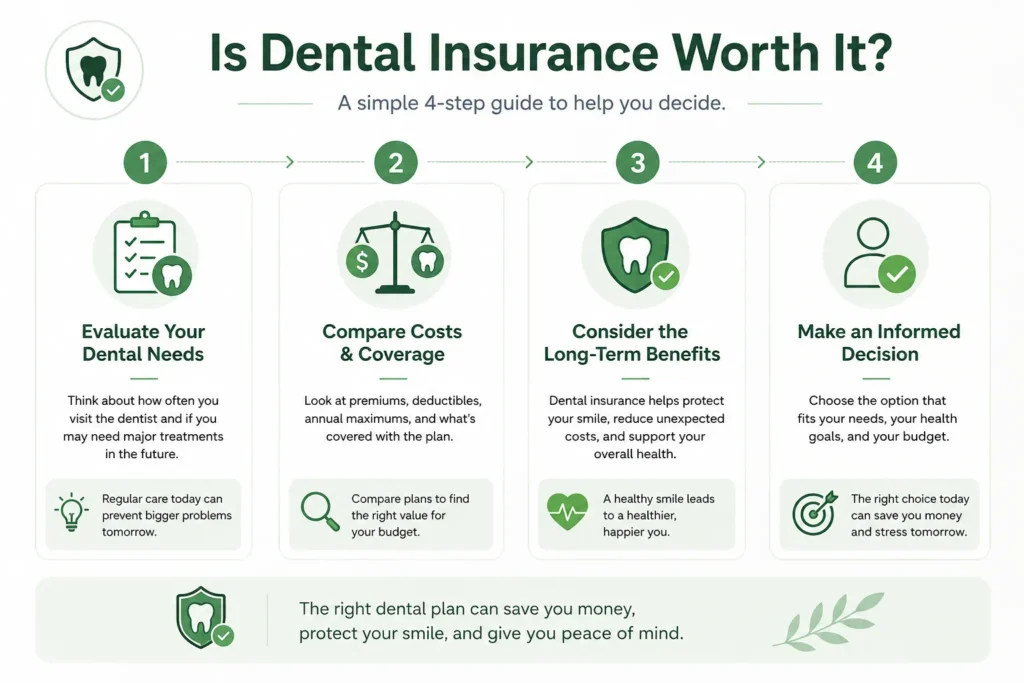
Our goal isn’t to sell dental insurance—it’s to help you understand your options before you choose.
How to Compare Plans for Your Situation
Use the same basic comparison process regardless of your life stage or employment situation.
1. Identify Who Needs Coverage
List every person who needs to be enrolled and confirm their eligibility.
2. Estimate Expected Dental Needs
Consider:
- Preventive visits
- Existing dental conditions
- Recommended treatment
- Orthodontic needs
- Dentures, crowns or implant treatment
- Preferred dentists and specialists
3. Review Plan Costs
Compare:
- Monthly premium
- Deductible
- Copayments
- Coinsurance
- Annual maximum
- Orthodontic lifetime maximum
- Out-of-network costs
4. Review Coverage Limitations
Check:
- Waiting periods
- Exclusions
- Frequency limits
- Replacement rules
- Age restrictions
- Missing tooth clauses
- Network requirements
5. Compare the Complete Yearly Value
Do not select a plan based on one feature alone.
A lower premium may come with:
- A smaller provider network
- Lower annual maximums
- Longer waiting periods
- Fewer covered services
- Higher treatment costs
Compare dental plans based on costs, coverage and provider access
Our Recommendation
Begin with your current situation rather than with a provider name or advertised premium.
Identify who needs coverage, which services are most likely to be used and whether keeping a particular dentist is important. Then compare plan documents for:
- Covered services
- Waiting periods
- Deductibles
- Annual maximums
- Orthodontic benefits
- Provider networks
- Procedure-specific limitations
The goal is not to find a universally “best” plan. It is to understand which features better match your family, age, work situation and expected dental needs.
Helpful Resources
Our Editorial Standards
Dental Coverage Hub creates educational resources to help U.S. consumers understand dental insurance options, costs and limitations more clearly. Our goal is not to tell readers which dental plan they must choose. Our goal is to help them understand their choices well enough to choose with confidence.
Editorial Policy
Learn how we research, write and update our educational content.
How We Review Dental Plans
See the process we follow when comparing plans, providers and coverage information.
Transparency is one of our core values. We believe informed decisions start with honest educational content.
Sources
- American Dental Association — Introduction to Dental Benefits
- HealthCare.gov — Dental Coverage in the Marketplace
- Medicare.gov — Dental Services
- National Association of Dental Plans — Dental Benefits 101
- HealthCare.gov — Small Business Health Options Program
- HealthCare.gov — SHOP Health Insurance Overview
Frequently Asked Questions
Is family dental insurance always cheaper than separate individual plans?
Not necessarily. Costs depend on the number of people enrolled, available plans, deductibles, premiums and expected dental needs.
Do seniors need a special type of dental insurance?
There is no single plan type required for seniors. Older adults may benefit from focusing on major-service coverage, provider access, annual maximums and treatment limitations.
Is dental insurance automatically included with Medicare?
Original Medicare generally does not cover most routine dental services. Some Medicare Advantage plans may offer additional dental benefits, but coverage and limitations vary.
Can self-employed individuals buy dental insurance?
Self-employed individuals may purchase individual or family dental coverage where available. They may also compare dental savings plans and other payment arrangements.
Is a small business owner considered self-employed?
A business owner may be self-employed, but coverage needs can be different when the business also has eligible employees.
Should I choose a plan only by its monthly premium?
No. The premium should be compared with deductibles, annual maximums, provider networks, waiting periods and expected out-of-pocket costs.
Can one dental plan work for every stage of life?
A plan may remain suitable for several years, but coverage needs can change when someone has children, retires, becomes self-employed or begins expecting major dental treatment.
Last reviewed: July 2026
About the Author: M.D., founder of Dental Coverage Hub and creator of educational content focused on dental insurance, plan comparisons and coverage options.
✅ Editorial note: This page is intended for general educational purposes and should not be considered insurance, financial, tax, legal or dental advice. Coverage, eligibility and plan terms vary by provider, location and individual circumstances.

Find Coverage That Matches Your Situation
Explore detailed guides for families, seniors, retirees, self-employed individuals and small business owners, then compare dental plans based on the benefits and limitations that matter most to you.